With the increasing rate of threats in cybersecurity, a Dynamic Standard is a novel approach to standardization that shortens the average standardized lifecycle without compromising governance and rigour. This then delivers standards that are agile, adaptable, and accessible to stakeholders.
A fast-changing cyber threat environment requires an annual low-cost recertification, i.e. an annual ‘vaccination’ against the latest cyber threats. Hence, dynamic standards annually updated can bolster the resilience of businesses against evolving risks and enabling seamless integration of cutting-edge technologies. In cybersecurity, dynamic standards are critical to ensure businesses are empowered to swiftly adapt to a fast-changing cyber threats and technological advancements.

Dynamic Standards at DSI
We leverage Dynamic Standards to ensure that our developed standards deliberately align with the capacities and requirements of small and medium-sized businesses (SMBs).
Unlike current standards and guidelines, which often cater exclusively to enterprises, our Dynamic Standards are tailor-made to cater to the unique needs and resources of SMBs. This inclusive focus ensures that the standards are comprehensible, manageable, and practical for businesses with limited resources and expertise.
As such, it is easier for SMBs to engage with cybersecurity and the certification process of our standards. In particular, the structure of our standards provides a pathway to scaffold businesses towards cybersecurity maturity.
Hence, SMBs are empowered to enhance their operational practices while helping to foster a culture of continuous improvement and adaptability.
In summary, a Dynamic Standard is a forward-looking and adaptable framework that enables swift responses to contemporary challenges by annually updating its guidelines. Controls break away from the convention of protracted standardization lifecycles and is uniquely calibrated to empower small and medium-sized businesses, ultimately resulting in accessible and achievable objectives.
Through its dynamic nature and SMB-focused approach, this innovative standardization paradigm redefines how businesses navigate the complex terrain of modern risks and opportunities.
Standards Development Process
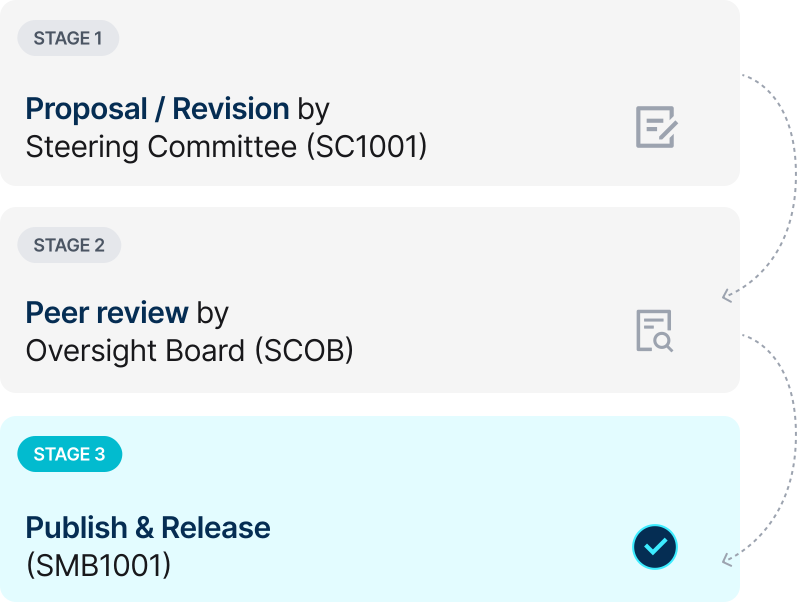
The genesis and process of creating a Dynamic Standard is guided by an Industry Steering Committee. A draft undergoes a period of development by the Steering Committee, and several iterations of review by the community and experts from the Standards and Certification Oversight Board (SCOB), before final publication within a year. DSI provides secretariat and publication support.
Published Dynamic Standards are reviewed and updated by their respective Steering Committees annually. The Dynamic Standards process overcomes the relatively-slower pace and bureaucracy of traditional standards development processes at national levels (close to 3 years) and at international levels (e.g., ISO) (close to 6 years) – empowering certified organizations aligned with the best strategies to prevent cyber attacks relative to the latest threat types.
Features
Timeliness
Technical accuracy and excellence in all documents.
Easy-to-understand language and process.
Easy adoption by small-and-medium businesses, which in turn, translates to a full coverage of the supply chain.
Cost-effectiveness of certification and attestation for SMBs.
Annual Publication Timeline
To keep pace with cyber threats, we update our dynamic standard annually so that businesses can certify or "vaccinate" against the latest threats.
Our Process
October - December
First revision of current edition by Steering Committee / Call for feedback.
February - April
Feedback reviewed by Steering Committee.
May - June
Feedback reviewed by Steering Committee / Final call for feedback / Approved to progress to Draft.
July
Draft presented to Steering Committee.
August
Draft approved by Steering Committee / Draft approved by SCOB for release.
September
SMB1001 Released.